

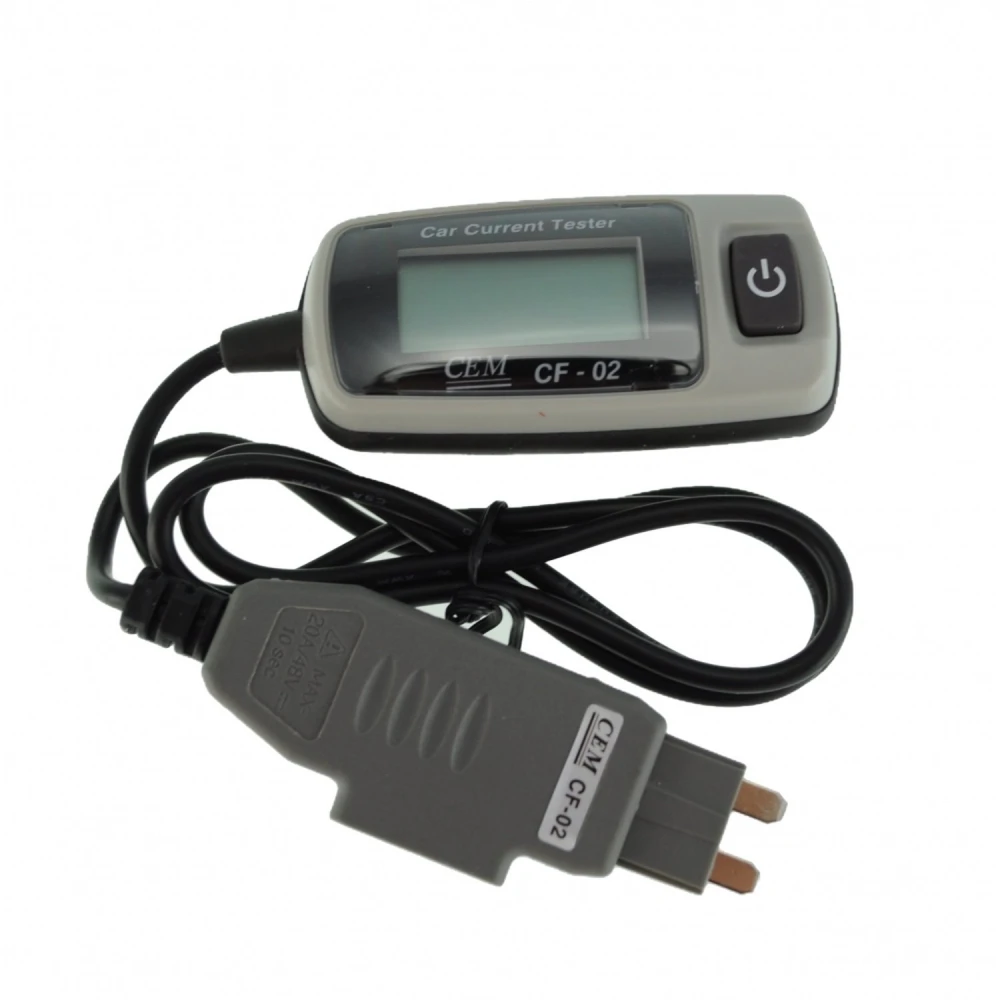
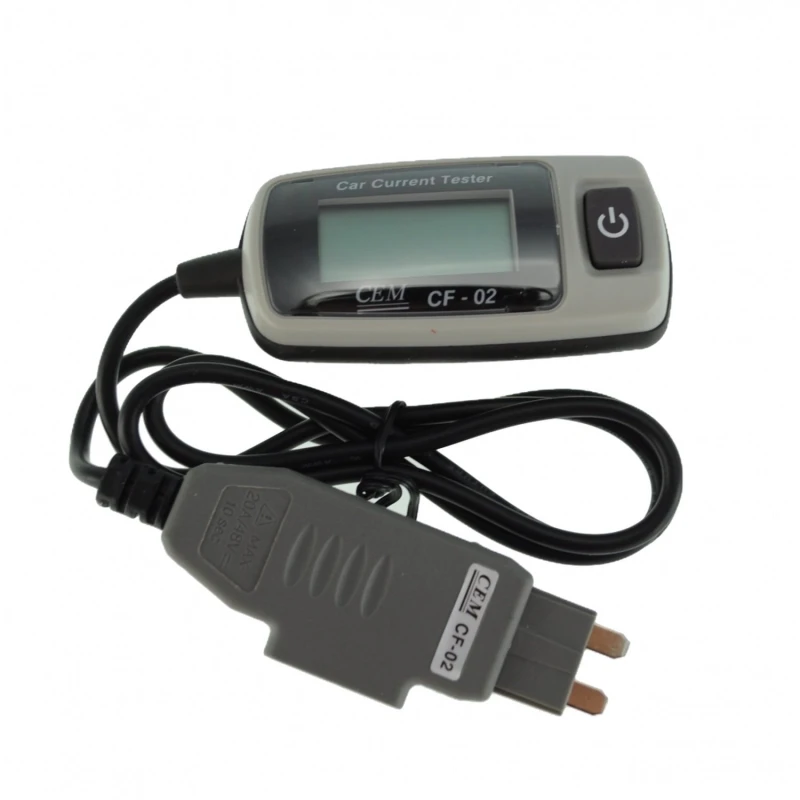
Tester de fusibles automotriz CF-02 con amperímetro portátil 5 mm
Marca: CEM
IVA incluido (Sin IVA: 18,10€)






El Tester de fusibles 5 mm. Amperímetro automotriz modelo CF-02 es una herramienta compacta y precisa diseñada para diagnosticar el consumo de corriente en circuitos automotrices. Se conecta directamente en el portafusibles del vehículo, sustituyendo el fusible, para medir la corriente consumida en ese circuito.
Esta herramienta es esencial para detectar consumos excesivos o desconocidos de energía en la batería, facilitando el mantenimiento y la reparación de vehículos. Gracias a su tamaño reducido, puede guardarse fácilmente en el bolsillo de una camisa, convirtiéndose en un accesorio imprescindible para técnicos y aficionados a la electrónica automotriz.
Características principales
- Modelo: CF-02
- Tipo de fusible: 20A / Max-Blade
- Resolución: 10 mA
- Pantalla LCD: hasta 1999 cuentas
- Rango de medición: hasta 20A / 48VDC durante 10 segundos
- Precisión: 2.0% lectura + 2 dígitos
- Voltaje máximo de medición: 12V a 48V máximo
- Fuente de alimentación: pila A23 incluida
- Longitud del cable: aproximadamente 75 cm
Usos típicos
- Diagnóstico del consumo de corriente en circuitos automotrices
- Detección de consumos excesivos o fugas en la batería
- Medición precisa para mantenimiento y reparación de vehículos
- Herramienta portátil para técnicos y aficionados
Compatibilidad
Compatible con fusibles tipo Max-Blade de hasta 20 amperios y voltajes entre 12V y 48V DC. Ideal para la mayoría de vehículos que utilizan fusibles estándar de 5 mm.
Este amperímetro para fusibles de coche es una solución práctica para medir el consumo de corriente en fusibles y realizar diagnósticos precisos de la batería y los circuitos eléctricos del automóvil.
- Se conecta directamente a portafusibles de 5 mm tipo Max-Blade
- Mide corriente hasta 20 amperios con precisión del 2%
- Pantalla LCD con resolución de 10 mA y hasta 1999 cuentas
- Rango de voltaje de 12V a 48V DC para mediciones seguras
- Incluye pila A23 para funcionamiento inmediato
- Cable de aproximadamente 75 cm para fácil conexión y manejo
- Ideal para diagnóstico de consumo de batería y circuitos automotrices
- Diseño compacto y portátil para llevar en el bolsillo
Preguntas y respuestas de clientes
Quin tipus de fusibles i sistemes elèctrics automotrius són compatibles amb el Tester De Fusibles CF-02?
El tester CF-02 és compatible únicament amb fusibles tipus Max-Blade de 5 mm, típics en automòbils de 12 a 48 VDC. No és adequat per a fusibles mini, micro ni altres formats, ni per a sistemes elèctrics fora d’aquest rang de voltatge.
Com s’instal·la el tester al circuit i quines mesures de seguretat s’han de prendre durant l’ús?
S’instal·la retirant el fusible i connectant el tester al seu lloc, assegurant la polaritat i evitant el contacte amb parts conductores exposades. Es recomana no superar els 10 segons de mesura contínua a càrrega màxima (20 A), fer servir guants aïllants i retirar la pila A23 si no s’utilitzarà durant períodes llargs.
En comparació amb un multímetre convencional, quins avantatges i limitacions ofereix el CF-02 per al diagnòstic automotriu?
El CF-02 és més ràpid i segur per mesurar corrent en circuits de fusibles automotrius, ja que s’adapta directament al portafusibles. La seva limitació és que no mesura altres paràmetres (tensió, resistència) ni s’adapta a tots els tipus de fusibles, a diferència d’un multímetre. El trade-off és especialització versus versatilitat.
What types of fuses and automotive electrical systems are compatible with the CF-02 Fuse Tester?
The CF-02 tester is compatible only with 5 mm Max-Blade fuses, typically found in 12 to 48 VDC vehicles. It is not suitable for mini, micro or other fuse formats, or for electrical systems outside that voltage range.
How is the tester installed in the circuit and what safety measures should be taken during use?
It is installed by removing the fuse and connecting the tester in its place, ensuring correct polarity and avoiding contact with exposed conductive parts. It is recommended not to exceed 10 seconds of continuous measurement at maximum load (20 A), to use insulated gloves, and to remove the A23 battery if it will not be used for long periods.
Compared with a conventional multimeter, what advantages and limitations does the CF-02 offer for automotive diagnostics?
The CF-02 is faster and safer for measuring current in automotive fuse circuits, as it fits directly into the fuse holder. Its limitation is that it cannot measure other parameters (voltage, resistance) or adapt to all fuse types, unlike a multimeter. The trade-off is specialisation versus versatility.
What type of fuses and automotive electrical systems are compatible with the CF-02 Fuse Tester?
The CF-02 tester is compatible only with 5 mm Max-Blade fuses, typically found in 12 to 48 VDC vehicles. It is not suitable for mini, micro or other fuse formats, nor for electrical systems outside that voltage range.
How is the tester installed in the circuit and what safety measures should be taken during use?
It is installed by removing the fuse and connecting the tester in its place, ensuring correct polarity and avoiding contact with exposed conductive parts. It is recommended not to exceed 10 seconds of continuous measurement at maximum load (20 A), to use insulated gloves, and to remove the A23 battery if it will not be used for long periods.
Compared with a conventional multimeter, what advantages and limitations does the CF-02 offer for automotive diagnostics?
The CF-02 is faster and safer for measuring current in automotive fuse circuits, as it fits directly into the fuse holder. Its limitation is that it cannot measure other parameters (voltage, resistance) or adapt to all fuse types, unlike a multimeter. The trade-off is specialisation versus versatility.
Vilka typer av säkringar och fordonselsystem är kompatibla med Tester De Fusibles CF-02?
CF-02-testern är endast kompatibel med Max-Blade-säkringar på 5 mm, som är vanliga i bilar med 12 till 48 VDC. Den är inte lämplig för mini-, micro- eller andra säkringsformat, eller för elsystem utanför detta spänningsområde.
Escribe una opinión de cliente
Los clientes que compraron este artículo también compraron

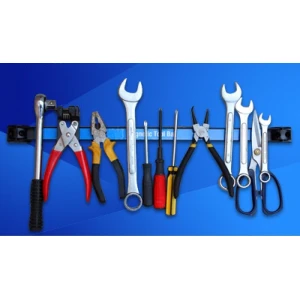
Soporte barra magnética para herramientas - Organizador eficiente y resistente
Tus artículos vistos recientemente