


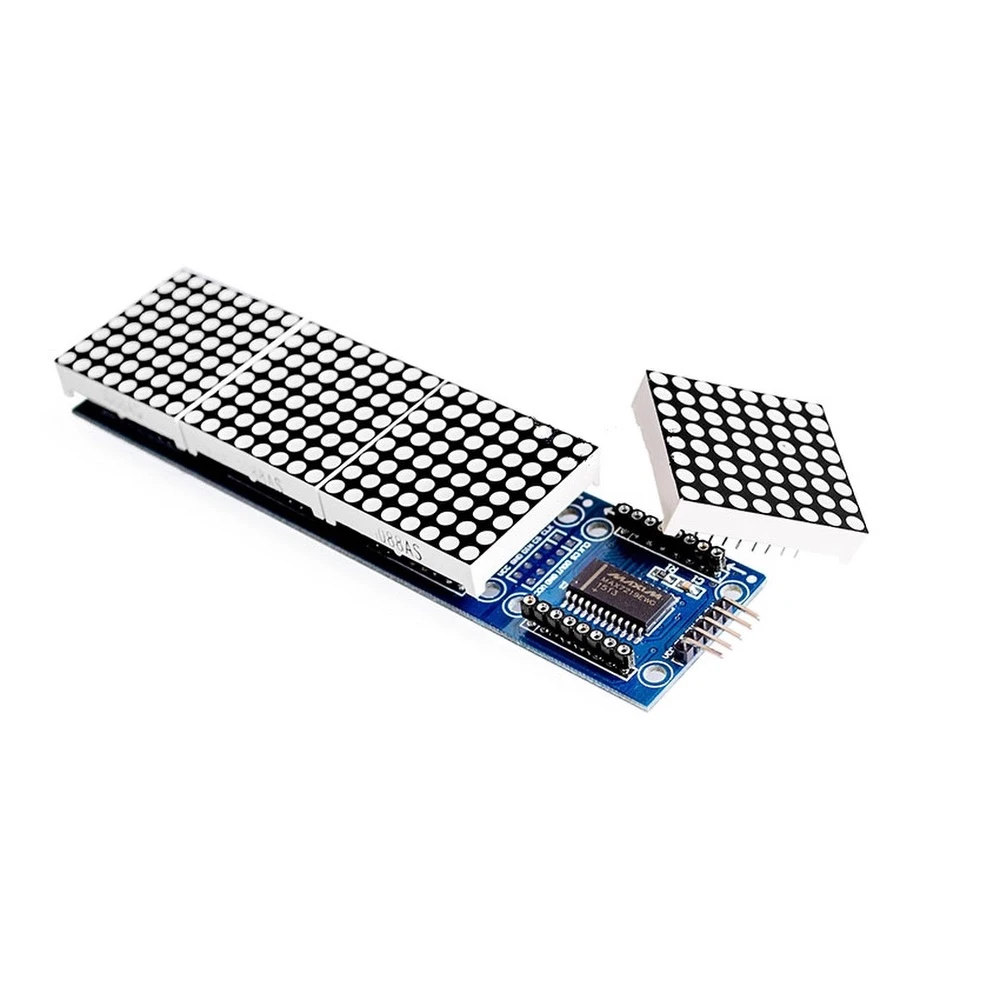
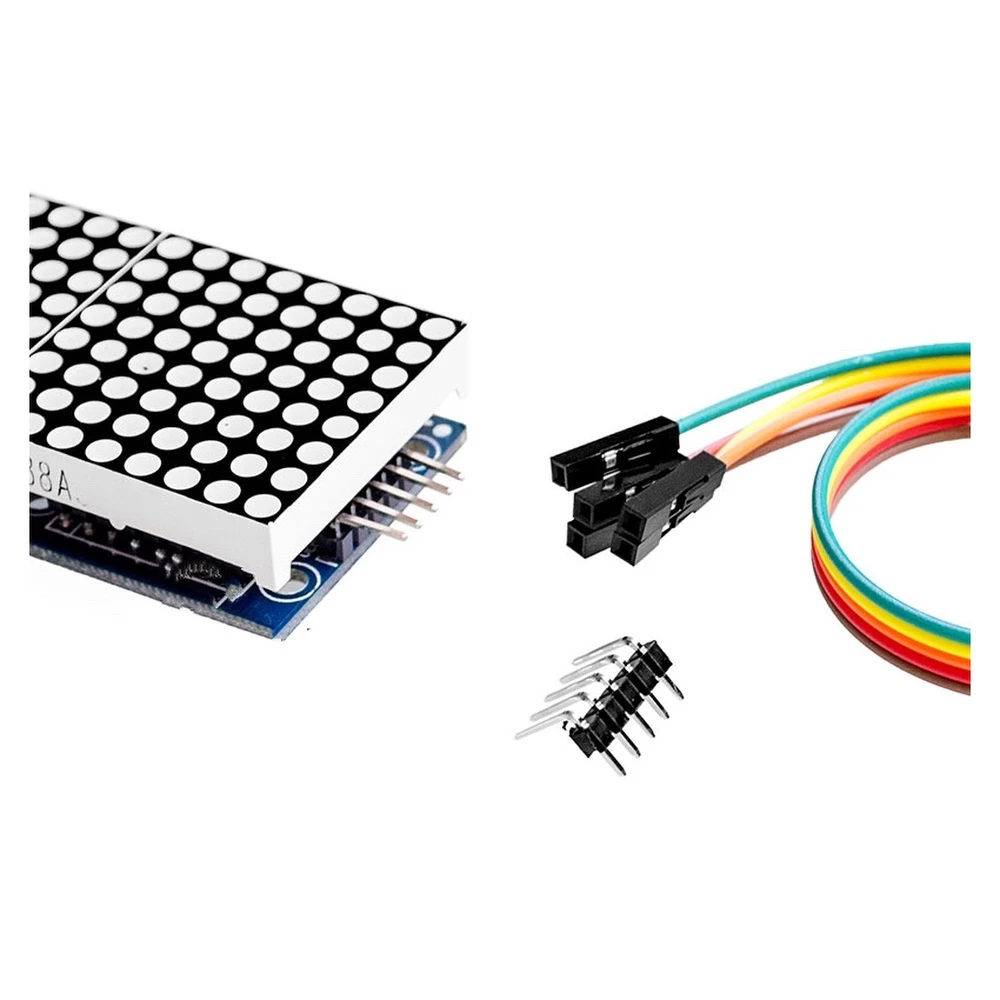
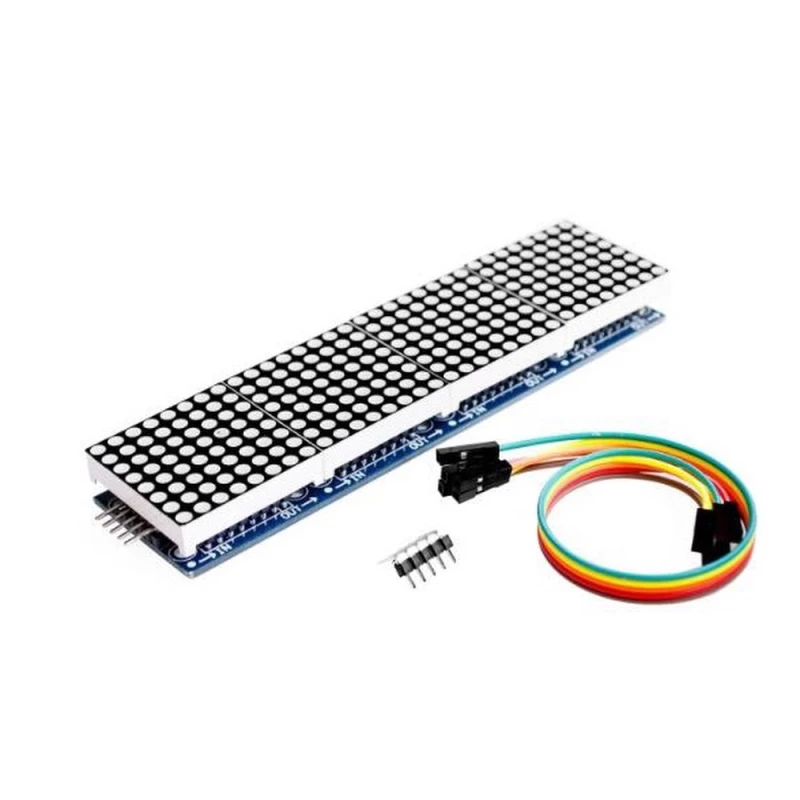
Módulo matriz de puntos 8x8 MAX7219 para Arduino y Raspberry Pi
Marca: satkit
IVA incluido (Sin IVA: 5,50 €)


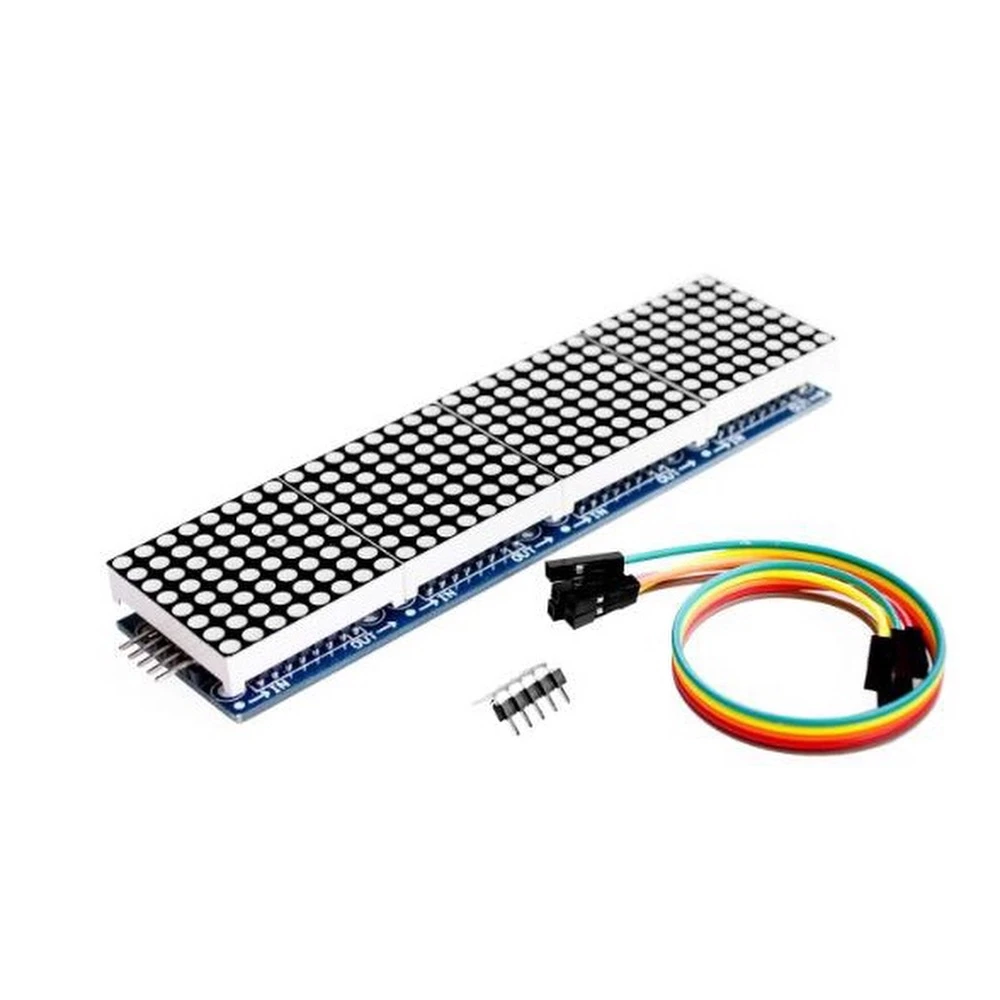
El módulo matriz de puntos 8x8 MAX7219 es un componente esencial para proyectos electrónicos con Arduino y Raspberry Pi. Este display LED permite mostrar textos, números y gráficos simples mediante una matriz de puntos que facilita la creación de tickers, relojes digitales, mensajes animados y otros displays informativos.
Este módulo está controlado por el chip MAX7219, que simplifica la gestión de la matriz de LEDs y reduce la cantidad de pines necesarios para su conexión. Su voltaje de funcionamiento es de 5V, lo que lo hace compatible con la mayoría de placas Arduino y sistemas similares.
Características clave:
- Controlador: MAX7219 para un manejo eficiente de la matriz LED.
- Voltaje de funcionamiento: 5V, compatible con Arduino y Raspberry Pi.
- Resolución: 8 x 32 píxeles, con puntos LED de 3 mm en color rojo para alta visibilidad.
- Dimensiones compactas: 32 x 129 x 14 mm, fácil de integrar en proyectos.
- Conexiones estándar: VCC, GND, DIN, CS y CLK para una instalación sencilla.
Usos típicos:
- Displays informativos para proyectos DIY con Arduino y Raspberry Pi.
- Creación de tickers para mostrar mensajes dinámicos o alertas.
- Visualización de números y textos en dispositivos electrónicos.
- Proyectos educativos para aprender sobre matrices LED y controladores MAX7219.
Compatibilidad: Este módulo es compatible con placas Arduino y Raspberry Pi, facilitando su integración en una amplia variedad de proyectos electrónicos y de hobby.
Con este módulo matriz de puntos, los desarrolladores y entusiastas de la electrónica pueden crear displays LED personalizados y funcionales con facilidad, aprovechando la potencia del controlador MAX7219 para simplificar el cableado y la programación.
- Controlador MAX7219 para manejo eficiente de matriz LED
- Voltaje de funcionamiento: 5V compatible con Arduino y Raspberry Pi
- Resolución 8 x 32 píxeles con LEDs rojos de 3 mm
- Dimensiones compactas: 32 x 129 x 14 mm
- Conexiones: VCC, GND, DIN, CS, CLK para fácil integración
Preguntas y respuestas de clientes
¿Cuáles son las dimensiones exactas de la matriz y qué contiene la caja al recibir el producto?
Las dimensiones del módulo son 32 mm de alto, 129 mm de largo y 14 mm de profundidad. En la caja se incluye la matriz ensamblada y los pines/conectores necesarios para su integración. No suelen incluirse cables jumper ni manual físico.
¿Es compatible con microcontroladores de 3,3V y cuáles son los pines requeridos para conexión?
El módulo está diseñado para operar a 5 V, por lo que conectar señales de 3,3 V directamente puede ocasionar falta de reconocimiento o funcionamiento inestable. Se recomienda usar un conversor de nivel lógico. Los pines necesarios son: VCC (5V), GND (tierra), DIN (datos), CS (chip select), CLK (reloj).
¿Cómo se instala y cuál es la buena práctica para asegurarse de que no se dañe el módulo durante su uso?
Se recomienda soldar los pines con cautela para evitar cortocircuitos y conectar la alimentación siempre al voltaje especificado. Es buena práctica añadir resistencias de limitación si se combinan varios módulos y evitar exponer el circuito a humedad o sobrecorriente. La luz debe limitarse a los valores especificados para prevenir sobrecalentamiento.
¿Qué rendimiento puede esperarse en términos de refresco y visibilidad, y cuáles son los límites típicos de operación?
El MAX7219 permite una tasa de refresco de hasta 800 Hz, suficiente para imágenes estables sin parpadeo visible a simple vista. El módulo funciona óptimamente entre 0–50 °C y no debe excederse el voltaje de 5V ni la corriente total recomendada por el datasheet (generalmente unos 320 mA para 32 LEDs encendidos simultáneos).
¿Con qué placas es compatible este módulo matriz de puntos 8x8?
Este módulo es compatible con placas Arduino y Raspberry Pi, funcionando a un voltaje de 5V.
¿Qué tipo de controlador usa este módulo?
Utiliza el controlador MAX7219, que facilita el manejo de matrices LED reduciendo la cantidad de pines necesarios.
¿Qué dimensiones tiene el módulo?
El módulo mide 32 x 129 x 14 mm, lo que permite integrarlo fácilmente en proyectos compactos.
¿Qué tipo de información se puede mostrar en este display?
Se pueden mostrar textos, números y gráficos simples, ideal para tickers y displays informativos.
¿Cómo se conecta el módulo a la placa Arduino o Raspberry Pi?
Se conecta mediante los pines VCC, GND, DIN, CS y CLK, siguiendo las conexiones estándar para este tipo de módulos.
Escribe una opinión de cliente
Los clientes que compraron este artículo también compraron

Sensor MQ-2 humo y gas Arduino - Módulo detector compatible para proyectos
Sensor intensidad luminica BH1750FVI compatible con Arduino - Medición precisa

Sensor INA3221 Arduino para monitor de voltaje y corriente de tres canales