


25,41 €
En stock
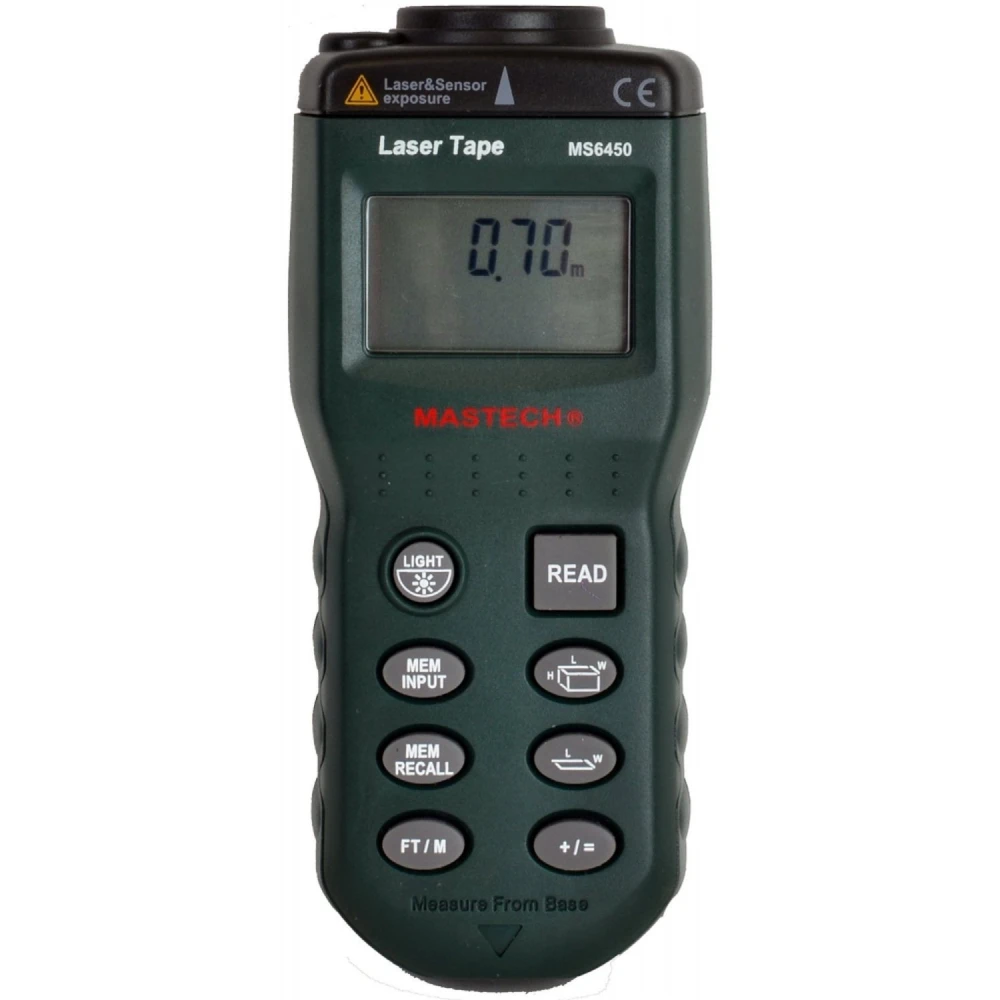
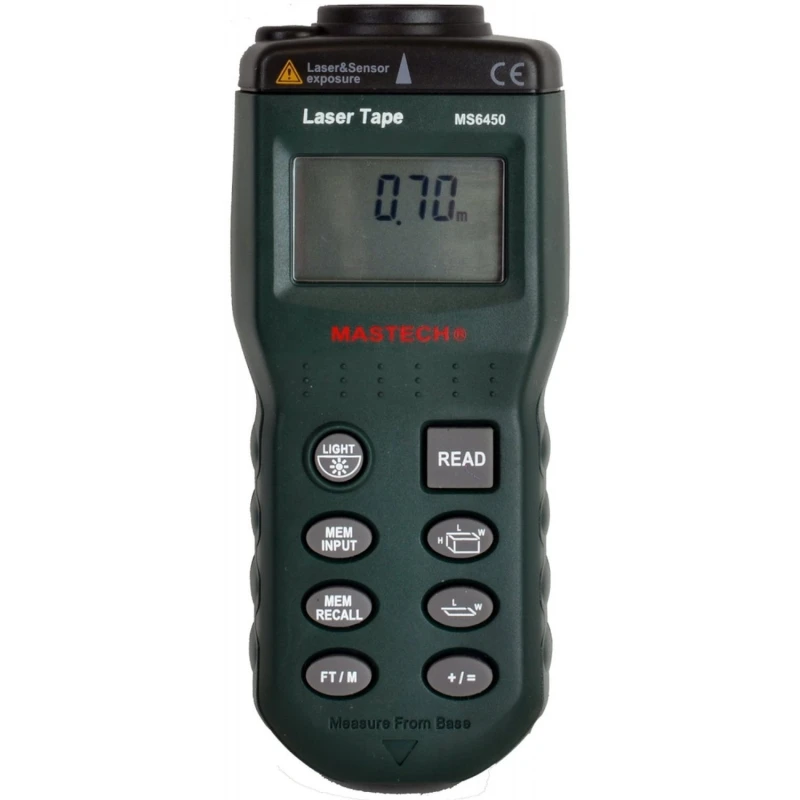
Medidor de distancias por ultrasonido Mastech MS6450 con apuntador láser
Marca: Mastech
25,41€
IVA incluido (Sin IVA: 21,00 €)
Descuentos por volumen
| Cantidad | Precio | Guardar |
|---|---|---|
| 2+ | 24,39 € | -4% |
| 10+ | 23,63 € | -7% |
| 20+ | 21,09 € | -17% |
Solo quedan 5 en stock. ¡Haz tu pedido pronto!
Entrega estándar
Mié, Oct 28 - Vie, Oct 30
Entrega exprés
Lun, Oct 26 - Mar, Oct 27
Devoluciones en 30 días
Devoluciones gratuitas en 30 días
Transacción segura


Share:
Envío gratis
En pedidos superiores a 60€
Devoluciones fáciles
Política de devolución de 30 días
Pago seguro
Proceso de pago 100% seguro
Garantía de calidad
Solo productos originales
El Medidor de Distancias por Ultrasonido con Apuntador Láser Mastech MS6450 es un instrumento de medición diseñado para ofrecer precisión y facilidad en la toma de distancias en diferentes entornos. Gracias a su tecnología de ultrasonido combinada con un apuntador láser rojo, permite medir con exactitud puntos específicos desde 0,6 hasta 15 metros.
Características principales:
- Modelo: MS6450
- Rango de medición: 0,6 a 15 metros
- Precisión: ± 0.5% ± 1 dígito
- Resolución: 0,01 metros
- Ángulo de apertura: aproximadamente ± 5 grados
- Tipo de diodo láser: Rojo 650nm
- Fuente de alimentación: 1 batería 6F22 (9V)
- Duración de batería: hasta 10 horas de uso continuo
- Cálculo de área y volumen: Sí, permite medir áreas y volúmenes fácilmente
- Medición en pies o metros: configurable según necesidad
- Pantalla retroiluminada: facilita la lectura en ambientes con poca luz
- Dimensiones: 136 mm × 59 mm × 38 mm
- Peso: aproximadamente 150 gramos, incluyendo batería
- Rango de cálculo máximo: longitud 9999 m, área 99999 m², volumen 99999 m³
Usos típicos:
- Medición rápida y precisa de distancias en construcción y reformas.
- Cálculo de áreas y volúmenes para proyectos de arquitectura o ingeniería.
- Medición en espacios interiores y exteriores gracias a su apuntador láser.
- Ideal para técnicos, instaladores y profesionales que requieren mediciones confiables.
Compatibilidad y facilidad de uso:
El medidor Mastech MS6450 es compatible con mediciones en pies o metros, ajustable según la preferencia del usuario. Su pantalla retroiluminada permite trabajar en condiciones de poca luz, y su batería de 9V ofrece una duración prolongada para trabajos continuos. Además, su diseño compacto y ligero facilita su transporte y manejo.
Este equipo es una solución económica y eficiente para quienes buscan un medidor de distancia electrónico barato sin sacrificar precisión y funcionalidad.
- Rango de medición de 0,6 a 15 metros con alta precisión
- Apuntador láser rojo de 650nm para mayor exactitud
- Cálculo de área y volumen integrado
- Pantalla retroiluminada para fácil lectura en ambientes oscuros
- Fuente de alimentación con batería 6F22 (9V) con duración de hasta 10 horas
- Medición configurable en metros o pies
- Diseño compacto y ligero, peso aproximado de 150 gramos
Preguntas y respuestas de clientes
¿Qué tipo de superficies pueden afectar la precisión del medidor de distancias por ultrasonido MS6450?
Las superficies blandas, absorbentes o irregulares (como cortinas, alfombras o paredes texturizadas) pueden disminuir la precisión del MS6450, ya que el ultrasonido requiere una superficie dura y plana para reflejarse adecuadamente. Para mejores resultados, se recomienda medir sobre paredes lisas y sólidas.
¿La pantalla retroiluminada del MS6450 permite una lectura clara en exteriores o bajo luz solar intensa?
La pantalla retroiluminada facilita la lectura en interiores o condiciones de baja luz, pero bajo luz solar directa puede haber dificultades de visibilidad, ya que no posee un alto contraste diseñado especialmente para exteriores. Se recomienda proteger la pantalla del sol directo al tomar medidas en exteriores.
¿Cuál es la precisión absoluta del MS6450 en su rango máximo de 15 metros y cómo se calcula esa tolerancia?
El MS6450 ofrece una precisión electrónica de ±0.5% del valor medido más ±1 dígito. Por ejemplo, a 15 m, el margen de error máximo sería 0.5% x 15 m = 0.075 m, sumando 0.01 m por el dígito, totalizando ±0.085 m. La máxima tolerancia esperada son ±8.5 cm a distancia máxima.
¿Es posible reemplazar fácilmente la batería del MS6450 y qué precaución principal se debe tener?
La batería de 9V (6F22) se puede reemplazar fácilmente retirando la tapa trasera. Se recomienda utilizar baterías alcalinas de calidad y evitar mezclar pilas viejas con nuevas. Hay que asegurarse de apagar el medidor antes de realizar el cambio para evitar cortocircuitos accidentales.
¿Cómo se compara el sistema ultrasónico del MS6450 frente a los medidores láser en términos de limitaciones técnicas?
A diferencia de los medidores láser, el MS6450 depende de la propagación y reflexión del sonido, lo que implica menor precisión y alcance (máximo 15 m), y mayor sensibilidad a las condiciones del entorno. Un medidor láser puede alcanzar distancias superiores (hasta 40 m o más) y mantener una precisión de ±2 mm bajo casi cualquier condición de superficie reflectante, aunque suele ser más costoso.
¿Cuál es el rango máximo de medición del medidor Mastech MS6450?
El rango máximo de medición es de 0,6 a 15 metros.
¿Qué tipo de láser utiliza este medidor de distancias?
Utiliza un diodo láser rojo con una longitud de onda de 650nm para apuntar el punto de medición.
¿Se puede medir en pies y metros con este dispositivo?
Sí, el medidor permite configurar la unidad de medida en pies o metros según la preferencia del usuario.
¿Cuánto dura la batería del medidor durante el uso continuo?
La batería tiene una duración aproximada de 10 horas en uso dinámico continuo.
¿El medidor incluye funciones para calcular área y volumen?
Sí, el Mastech MS6450 permite calcular áreas y volúmenes, facilitando mediciones más complejas.
Escribe una opinión de cliente
Los clientes que compraron este artículo también compraron
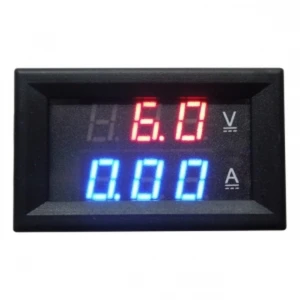
Voltímetro y amperímetro digital empotrable rojo 4.5-100V y 0-10 amperios
6,05€
Solo quedan 8 en stock
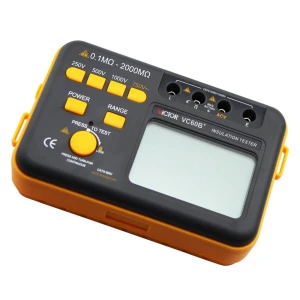
Victor VC60B+ Medidor de aislamiento CAT III 1000 V para resistencias hasta 2000 MΩ
45,99€
Solo quedan 4 en stock
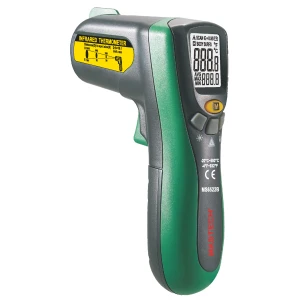
Termometro infrarrojos Mastech MS6522B con puntero laser (-20ºC a +500ºC)
30,25€
Solo quedan 5 en stock
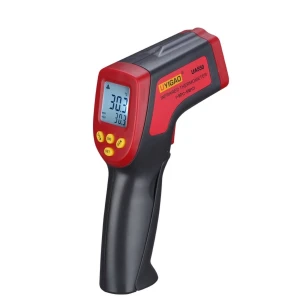
Termómetro infrarrojos industrial UA550 con puntero láser -32ºC a +550ºC
22,99€
Solo quedan 9 en stock
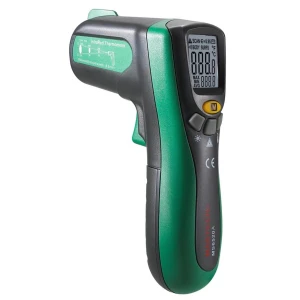
Termometro infrarrojo Mastech MS6520A con puntero laser (-20ºC a +300ºC)
25,88€
Solo quedan 3 en stock
Medidor de distancias por ultrasonido Mastech MS6450 con apuntador láser
25,41 €